
How Biometrics is Shaping the Future of KYC and Payments

By
Rohith Reji
22 Jun
5 Mins

The Evolution of KYC

KYC is a fundamental regulatory requirement aimed at preventing money laundering, fraud, and identity theft. Historically, KYC involved manual verification processes that required customers to submit physical documents, leading to delays and potential errors. The advent of digital KYC has transformed this space, enabling faster, more accurate, and seamless verification processes.

Image courtesy of Vlada Karpovich via Pexels

Neokred's Vision and Approach

Neokred is at the forefront of this digital transformation, offering cutting-edge solutions that simplify and streamline KYC procedures. Their approach is rooted in leveraging advanced technologies such as artificial intelligence (AI), machine learning (ML), and blockchain to create a secure, efficient, and user-friendly KYC process.

“In a world older and more complete than ours they move finished and complete, gifted with extensions of the senses we have lost or never attained, living by voices we shall never hear.”

Rohith Reji, CEO

Key Features of Neokred's Digital KYC Solution

  • AI-Driven Verification
    Neokred uses sophisticated AI algorithms to verify customer identities in real-time. By analyzing patterns and detecting anomalies, AI ensures that only genuine documents are accepted, significantly reducing the risk of fraud.
  • Seamless User Experience
    The platform is designed with the end-user in mind, offering an intuitive interface that guides customers through the verification process effortlessly. Users can upload documents, capture selfies, and complete verification steps from the comfort of their homes.
  • Blockchain Security
    Blockchain technology enhances the security of KYC data by creating an immutable ledger that is resistant to tampering. This ensures that customer data is protected and can be audited with transparency.

Success Stories

Several businesses have already reaped the benefits of Neokred's innovative KYC solution. For instance, fintech startups have been able to onboard new users within minutes, while traditional banks have significantly reduced their KYC processing times and costs. The positive impact on customer satisfaction and operational efficiency has been profound, demonstrating the transformative power of Neokred's technology.
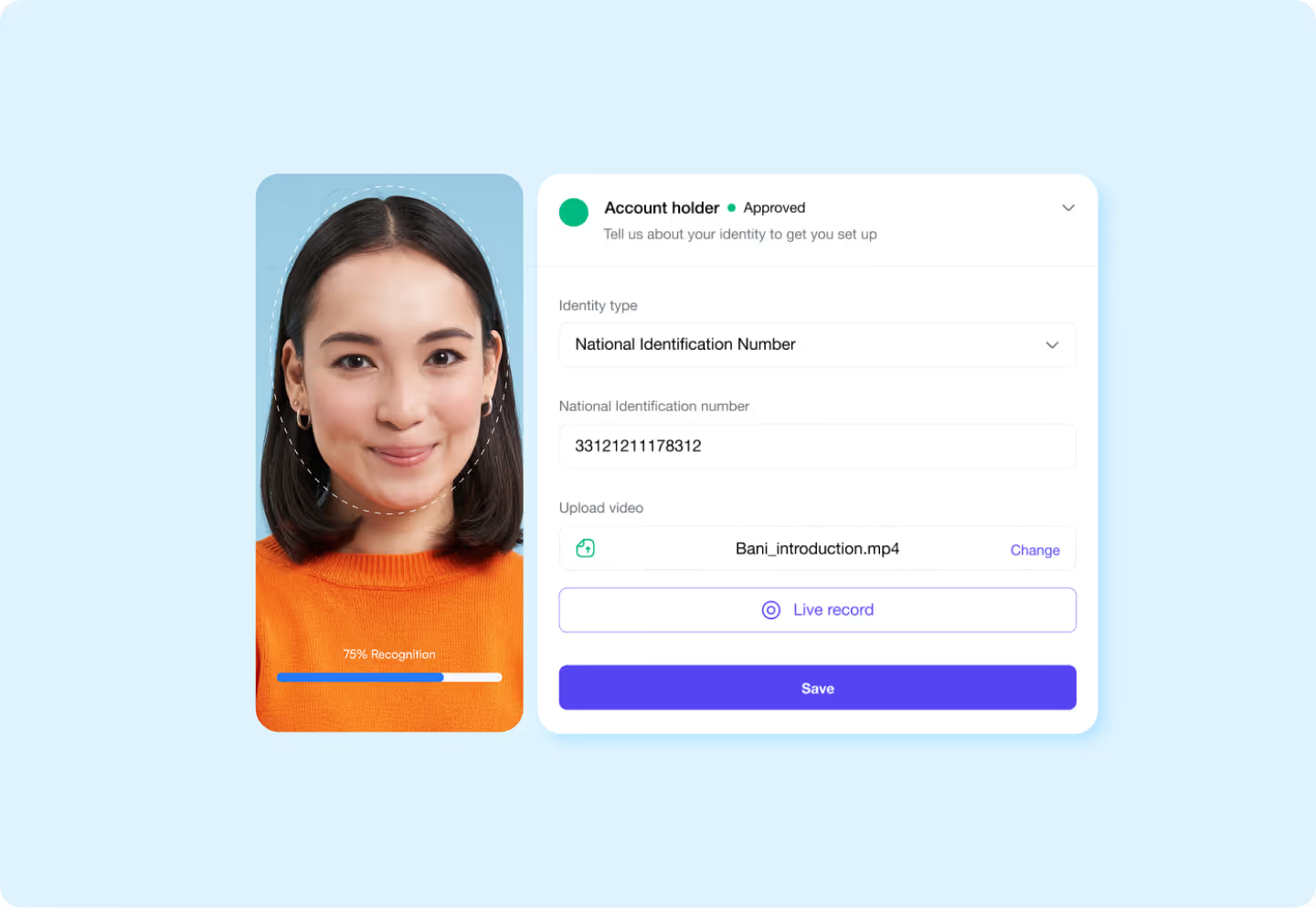
Image courtesy of Vlada Karpovich via Pexels

The Future of KYC with Neokred

As digital transformation continues to reshape the financial industry, Neokred is poised to lead the charge in KYC innovation. The company is continually refining its technologies, exploring new applications for AI and blockchain, and expanding its global footprint. With a commitment to excellence and a vision for a secure, efficient, and customer-centric KYC process, Neokred is setting new standards in the industry.

Conclusion

Neokred's digital KYC solution represents a significant leap forward in the way businesses approach identity verification. By harnessing the power of AI, blockchain, and seamless integration, Neokred not only simplifies the KYC process but also enhances security and compliance. For businesses looking to stay ahead in a competitive market, embracing Neokred's innovation could be the key to unlocking greater efficiency, cost savings, and customer satisfaction.

Conclusion

FAQs

Is there a free trial available?

Yes, you can try us for free for 30 days. If you want, we’ll provide you with a free, personalized 30-minute onboarding call to get you up and running as soon as possible.

Can I change my plan later?

Yes, you can try us for free for 30 days. If you want, we’ll provide you with a free, personalized 30-minute onboarding call to get you up and running as soon as possible.

What is your cancellation policy?

Yes, you can try us for free for 30 days. If you want, we’ll provide you with a free, personalized 30-minute onboarding call to get you up and running as soon as possible.
Can other info be added to an invoice?

Yes, you can try us for free for 30 days. If you want, we’ll provide you with a free, personalized 30-minute onboarding call to get you up and running as soon as possible.

How does billing work?

Yes, you can try us for free for 30 days. If you want, we’ll provide you with a free, personalized 30-minute onboarding call to get you up and running as soon as possible.

How do I change my account email?

Yes, you can try us for free for 30 days. If you want, we’ll provide you with a free, personalized 30-minute onboarding call to get you up and running as soon as possible.

Verified
Build Frictionless
Customer Journeys
Get Started

Related Posts

View All
5 Mins

What Is a UPI Soundbox and Why It’s Transforming Retail Payments in India

What Is a UPI Soundbox and Why It’s Transforming Retail Payments in India

What Is a UPI Soundbox?

A UPI Soundbox is a compact speaker device placed at a merchant’s counter. When a customer pays using UPI by scanning a QR code, the device announces the payment amount out loud  for example:

“Received ₹250.”

This removes the need for merchants to check SMS messages or mobile apps manually.

The device is linked directly to the merchant’s UPI ID and receives real-time transaction confirmations.

How Does a UPI Soundbox Work?

The process is simple:

  1. The customer scans the merchant’s UPI QR code.
  1. The payment is completed via a UPI app.
  1. The transaction is processed through the UPI network.
  1. The soundbox receives confirmation.
  1. The device announces the amount instantly.

Most soundboxes use built-in SIM connectivity, so merchants do not need to depend on their personal phones for alerts.

Why UPI Soundboxes Were Introduced

As UPI adoption surged across India, merchants faced new challenges:

  • Fake payment screenshots
  • Delayed SMS confirmations
  • Time wasted checking phones
  • Disputes over whether payment was received

UPI Soundboxes were introduced to provide immediate, verified confirmation reducing friction at the counter.

Key Benefits for Retailers

Instant Verification

No need to check a mobile device repeatedly.

Fraud Reduction

Audio confirmation linked directly to the UPI network reduces screenshot fraud.

Faster Checkout

Transactions are confirmed in seconds, improving customer flow.

Hands-Free Convenience

Merchants can continue serving customers without interrupting work.

Why UPI Soundboxes Are Transforming Retail Payments

India’s retail sector includes millions of small merchants who are rapidly adopting digital payments.

UPI Soundboxes support this shift by:

  • Increasing merchant confidence in digital transactions
  • Encouraging customers to pay via UPI
  • Reducing payment disputes
  • Improving operational efficiency

For kirana stores, street vendors, pharmacies, and restaurants, the device simplifies digital acceptance.

The UPI Soundbox may look like a small device, but its impact on India’s retail ecosystem is significant.

By delivering instant voice confirmation, it has improved trust, speed, and transparency in digital transactions.

As retail payments continue to shift toward UPI and real-time digital acceptance, merchants increasingly need reliable, connected payment infrastructure that reduces friction at checkout.

For businesses looking to deploy secure, scalable UPI Soundbox solutions and modern payment devices, Neokred’s Soundbox infrastructure is designed to support real-time transaction confirmation, multi-language announcements, and seamless integration into today’s retail environments.

Digital payments are no longer optional and the right infrastructure makes all the difference.

5 Mins

The Evolution of POS Systems: From Card Swipes to Smart Retail Infrastructure

The Evolution of POS Systems: From Card Swipes to Smart Retail Infrastructure

What Is a POS System?

A POS (Point of Sale) system is the hardware and software used by businesses to process customer transactions.

Traditionally, POS systems were used only to:

  • Swipe debit and credit cards
  • Authorise transactions
  • Print receipts

Today, POS systems have become multi-functional retail platforms that manage payments, data, and operations together.

Phase 1: The Era of Card Swipe Machines

In the early days of digital payments, POS machines were simple card terminals.

They allowed merchants to:

  • Accept debit and credit cards
  • Authorise transactions via bank networks
  • Generate printed receipts

These devices were standalone and focused purely on card payments. They did not support analytics, inventory management, or multi-channel integration.

Phase 2: EMV, Contactless & Multi-Payment Acceptance

As payment technology evolved, POS systems began supporting:

  • EMV chip-based cards
  • Contactless tap payments
  • NFC-enabled cards
  • Mobile wallets

This shift improved security and speed while expanding customer payment choices. POS machines became more secure and compliant with global payment standards.

Phase 3: The Rise of UPI and QR-Based Payments

India’s digital payment revolution accelerated with UPI.

Modern POS systems began integrating:

  • UPI QR acceptance
  • Real-time transaction processing
  • Instant payment confirmation

Retailers were no longer limited to card payments. POS infrastructure had to adapt to a multi-mode environment. This marked a major turning point in retail payments.

Phase 4: Smart POS and Connected Retail Infrastructure

Today’s POS systems are no longer just payment terminals.

They function as smart retail infrastructure by offering:

  • Multi-payment acceptance (cards, UPI, wallets)
  • Cloud-based reporting
  • Inventory management integration
  • GST-compliant billing
  • Customer data insights
  • Digital reconciliation

Modern POS devices are often Android-based, app-enabled, and connected to cloud dashboards. Retailers can now track sales in real time, manage stock, and analyse performance all from a single system.

Why POS Systems Had to Evolve

Several factors drove the transformation:

1. Growth of Digital Payments

India’s rapid adoption of cards, UPI, and wallets required flexible POS solutions.

2. Need for Faster Checkout

Retail environments demand speed. Integrated systems reduce friction and queue times.

3. Data-Driven Retail

Retailers now rely on sales analytics, demand forecasting, and digital reconciliation.

POS systems became a data engine, not just a payment tool.

4. Omnichannel Commerce

Businesses operate both online and offline. Modern POS systems help unify transactions across channels.

What Makes a POS System “Smart” Today?

A smart POS system typically includes:

  • Multi-mode payment support
  • Cloud connectivity
  • App-based functionality
  • Real-time reporting
  • Secure transaction processing
  • Integration with accounting tools

It serves as the central operational hub of a retail business.

The Future of POS Systems in India

POS infrastructure is expected to become even more intelligent.

Emerging trends include:

  • AI-driven sales insights
  • Integrated loyalty programs
  • Contactless-first environments
  • Embedded financing options
  • Seamless UPI integration

As retail modernises, POS systems will continue to move from standalone devices to fully integrated digital ecosystems.

POS systems have evolved from simple card terminals to intelligent retail infrastructure that powers payments, reporting, and operational efficiency.

In today’s digital economy, businesses require POS machines that support multiple payment modes, real-time reconciliation, and connected retail operations.

Modern POS infrastructure must be secure, scalable, and adaptable to UPI-driven retail environments.

Neokred’s POS machines and integrated Soundbox solutions are built to support this next phase of smart retail enabling merchants to accept digital payments seamlessly while maintaining operational visibility and reliability.

As retail continues to digitise, choosing the right POS infrastructure becomes a strategic decision, not just a transactional one.

5 Mins

Consent Under the DPDP Act: What Businesses Must Build

Consent Under the DPDP Act: What Businesses Must Build

Why Consent Is Central to the DPDP Act

The DPDP Act makes lawful processing of personal data conditional on valid consent (in most business use cases).

Consent is no longer symbolic. It is enforceable and accountable.

The shift is clear: From collecting agreement to engineering proof.

What the DPDP Act Requires for Valid Consent

Consent must be:

  • Free from coercion or dark patterns
  • Specific to clearly defined purposes
  • Informed through transparent notices
  • Unambiguous through clear affirmative action
  • Revocable as easily as given
  • Verifiable through structured records

If any one of these elements is missing, consent may not meet compliance standards.

What Businesses Must Build to Comply

Understanding the law is not enough. Systems must support it. To meet DPDP consent requirements, businesses must implement:

Structured Consent Capture

Consent must be stored purpose-wise, not as a single “accepted” flag.

Purpose Mapping

Each processing activity must align with a declared purpose. Secondary use without fresh consent creates compliance risk.

Version Tracking

If consent language changes, the system must record which version each user agreed to.

Consent Lifecycle Management

Consent is dynamic. Systems must track:

  • Given
  • Updated
  • Withdrawn
  • Expired

Withdrawal Enforcement

Withdrawal must be easy and must automatically restrict further processing. If withdrawal does not propagate across systems, compliance gaps appear.

Audit-Ready Consent Logs

Businesses must be able to produce:

  • Timestamp of consent
  • Notice version
  • Purpose mapping
  • Current consent status

This must be exportable and regulator-ready.

Manual records or fragmented systems create operational risk.

Why Most Businesses Are Underprepared

Many organisations believe they are compliant because they:

  • Have a cookie banner
  • Store a timestamp
  • Mention consent in privacy policy

But DPDP requires structured, enforceable consent infrastructure.

Common gaps include:

  • No purpose-level tagging
  • No real-time consent validation
  • No automated withdrawal propagation
  • No audit-ready consent exports
  • No integration between frontend consent and backend processing

Consent that cannot be demonstrated is legally fragile.

Consent Is Now Infrastructure

The DPDP Act transforms consent into a technical function.

Legal defines requirements. Product designs the interface. Engineering must build enforceable systems.

Consent must now exist as:

  • Structured data
  • Processing rules
  • Validation checkpoints
  • Automated lifecycle logic
  • Continuous monitoring

This is where many businesses struggle because consent was never built as infrastructure.

The Role of Consent Management Platforms

To meet DPDP standards at scale, businesses increasingly require dedicated consent management systems that:

  • Capture purpose-specific consent
  • Maintain version-controlled notices
  • Enable easy withdrawal
  • Track consent lifecycle events
  • Generate audit-ready reports
  • Integrate with backend systems

Without a structured consent management layer, organisations often rely on patchwork solutions across marketing tools, product databases, and CRM systems.

That fragmentation increases compliance risk.

Building DPDP-Ready Consent Architecture

A DPDP-aligned consent system should:

  • Separate purposes clearly
  • Ensure equal prominence of accept and reject options
  • Provide user-accessible preference dashboards
  • Store consent logs in structured, queryable formats
  • Trigger automated updates when consent changes
  • Support compliance reporting instantly

Purpose-built platforms such as Blutic are designed to support this transition transforming consent from a superficial banner into a backend compliance engine.

Blutic enables:

  • Purpose-based consent capture
  • Structured consent logging
  • Real-time withdrawal workflows
  • Version-controlled notices
  • Audit-ready reporting aligned with DPDP expectations

Rather than retrofitting compliance into existing systems, businesses can integrate consent management as a foundational layer.

Consent under the DPDP Act is no longer a user interface element.

It is compliance infrastructure.

Businesses must build systems that:

  • Capture consent clearly
  • Map it to defined purposes
  • Track lifecycle changes
  • Enforce withdrawal automatically
  • Generate audit-ready proof

Organisations that treat consent as documentation risk exposure. Those that engineer consent into their systems build resilience.

As DPDP enforcement matures in India, businesses that implement structured consent architecture through specialised platforms like Blutic position themselves for scalable, regulator-ready compliance without disrupting user experience.

In the DPDP era, consent is not collected. It is built.

Ready to take your customer experience and product to next level with Neokred